
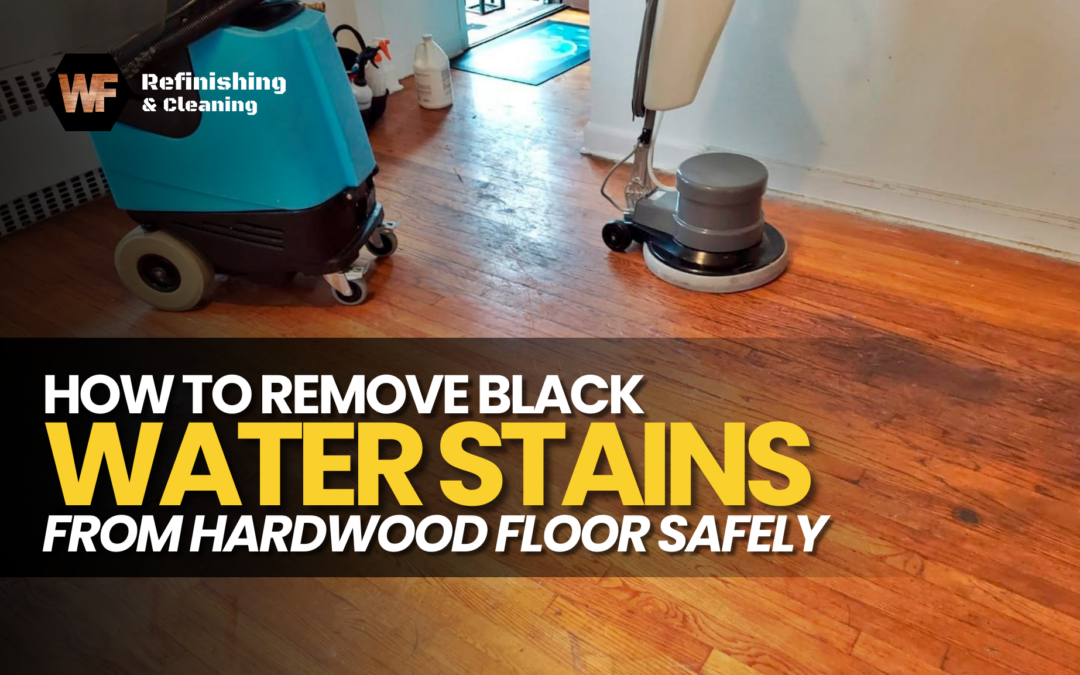
How to Remove Black Water Stains from Hardwood Floors Safely
Black water stains on hardwood floors are one of the most concerning issues homeowners face. Unlike light surface stains, dark or black marks often indicate deeper moisture penetration that has reacted with the wood itself. Understanding the cause is the first step toward safe and effective removal.
What Causes Black Water Stains on Hardwood Floors?
Black stains typically form when water penetrates the finish and reacts with natural tannins in the wood. This reaction creates a dark discoloration beneath the surface.
Common causes include:
- Pet accidents left untreated
- Leaking plant pots
- Spilled water not dried properly
- Plumbing leaks
- Wet shoes or snow buildup
The longer moisture sits, the deeper it penetrates.
Book a Cleaning with WFRC Today!
Step 1: Test the Finish First
Apply a few drops of water near the stained area.
- If water beads up → finish is intact.
- If water soaks in → finish is compromised.
If the finish is damaged, the stain likely sits below the protective layer.
Step 2: Try a Gentle Cleaning Method (For Minor Stains)
For light surface discoloration:
- Mix white vinegar and water (1:1 ratio).
- Lightly dampen a cloth (do not soak).
- Gently rub the stained area.
- Dry immediately with a clean towel.
⚠️ Important: Avoid excessive moisture. Over-wetting can worsen the problem.
This method only works if the stain has not penetrated deeply.
HARDWOOD FLOOR MAINTENANCE SERVICES
Residential Wood Floor Maintenance
Commercial Wood Floor Maintenance
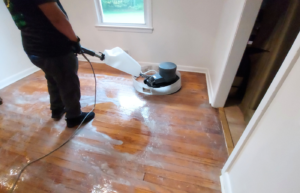
Professional Hardwood Foor Restoration for Home Sellers
Get Your Home Market-Ready with Hardwood Floor Maintenence
Worn-out hardwood floors can leave a negative impression, making it harder to sell your home quickly and at the best price. Investing in Hardwood Floor Maintenance service enhancing your home’s appeal and helping it stand out in a competitive market. Learn More…
Step 3: Hydrogen Peroxide Treatment (Deeper Stains)
For darker stains:
- Soak a clean cloth in 3% hydrogen peroxide.
- Place it over the stain.
- Cover with plastic wrap.
- Leave for several hours.
- Check progress and repeat if necessary.
Hydrogen peroxide acts as a mild bleaching agent that can lighten deep water stains.
⚠️ Always test in an inconspicuous area first.
When DIY Methods Won’t Work
If the stain remains dark after peroxide treatment, the discoloration has penetrated deeply into the wood fibers. At this stage, surface treatments are ineffective.
The only reliable solution may be:
- Spot sanding
- Screen and recoat
- Full refinishing (if damage is widespread)
Deep black stains often require removing the top wood layer to eliminate the discoloration completely.
Can Black Water Stains Be Permanent?
In some cases, yes. If moisture exposure was prolonged, the wood fibers may be permanently altered. However, most stains can be significantly improved or fully removed with proper refinishing techniques.
The key is early intervention.
Floor Cleaning Topics:
Our Latest Videos:
FAQs About Black Water Stains on Hardwood Floors
Are black stains on hardwood floors always caused by water?
Most black stains are caused by moisture reacting with wood tannins, but mold or pet urine can also contribute.
Can steam cleaning remove black stains?
No. Steam cleaning can actually worsen the problem by adding more moisture.
How do I know if I need refinishing?
If cleaning and peroxide treatments do not lighten the stain, refinishing is likely required.